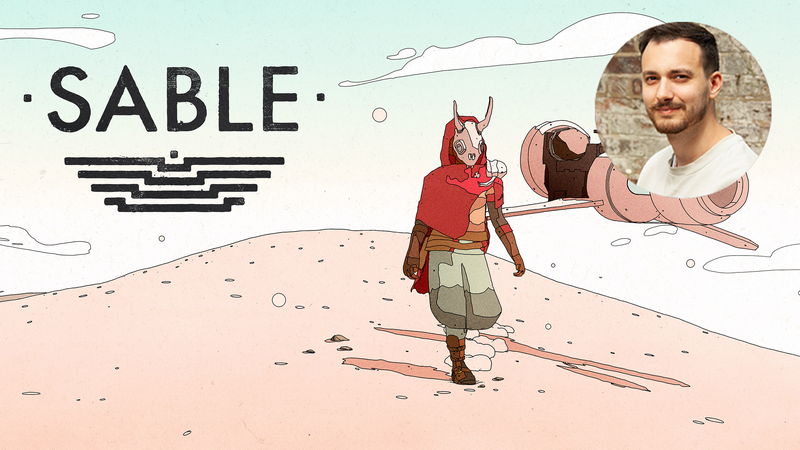
Sable is a reference point for me as a game. Many times through the environment or music and sounds emanates an almost religious feeling of overwhelm that many times we do not easily detect in our worldly life. Greg Kythreotis, creative director of Shedworks based in Great Britain, reveals the course into a digital nirvana.
Sable is a piece of art, among other things! What was your inspiration for the creative part?
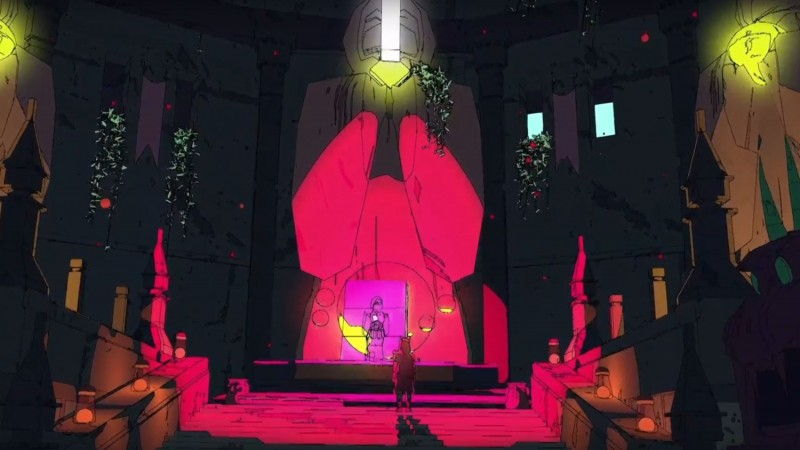
I am the Creative Director at “Shedworks”, we are a small studio based in London and have worked on numerous smaller mobile titles and other freelance projects before our latest release, Sable. There were many inspirations for Sable, across all kinds of mediums. It would be hard to narrow it down to one particular one, but visually we were inspired by the works on Moebius, Studio Ghibli and numerous other illustrated and animated works. We were also very inspired by architecture such as Carlo Scarpa, Arcosanti and the Metabolists.
Dystopia is a common concept in video games. Do you think that by simulating it we are trying to criticize the contemporary state and order of things?
Potentially, there is always some reflection or critique of an artist’s current circumstance in their work, whether subconscious or consciously. As for dystopia in particular, I wouldn’t say Sable is particularly dystopic myself, it’s a rumination on different ways of living but I would say it was post-apocalyptic in that sense. The ‘end’ event has happened, humans have survived, adapted and thrived since – as they always do – in that way I’d say it is a positive rumination.
Do you think that digital narration through video games has the same potentiality as watching a movie or a theatrical play?
It depends what you mean by potentiality here. I think different media are good at different things, but are rarely restricted in what they can do. A movie may be better at evoking certain emotions than videogames, but videogames are very good at evoking others, for example, with Sable we really wanted to push the feelings of curiosity and exploration. I think this is something videogames have a lot of potential and quality in exploring. On the other hand, it may be harder (but not impossible) to make games that explore more directed character narratives than in film. I think you should think a lot about the strengths and peculiarities of the medium before developing any project.
Do you play video games? Could you mention some favorite ones and also developers that you would love to work with?
I play a lot of games, new and old – currently I’m playing Majoras Mask again and really enjoying it, whilst also working my way through the brilliant Elden Ring. I just finished Tunic and Citizen Sleeper too, both of which were fantastic games in different ways. The other game I’m working my way through slowly is Final Fantasy Tactics Advance, which is sublime, the structure, art and gameplay are all gorgeous. As for developers I’d like to work with, it’s hard to say. I feel like I’m more likely to collaborate with people outside of games in my process, but if I could work on any game I’d love to work on a Zelda game with the tone of Majoras Mask or a Souls game I think.
What about your future plans? Would you develop a sequel for Sable?
We’re updating Sable and working on some other smaller things at the moment. We have no plans for a Sable sequel.
We are witnessing an indie revolution during the last years. More and more indie games are way better than the so called triple A ones. Do you think that major publishers and developers have lost their creativity? It seems that indie games have more stories to tell and way, way better than the major ones.
I think there’s plenty of creativity at the studios and the developers in AAA are some of the most hardworking and dedicated people in the industry, it’s just fundamentally harder to take risks at that scale with the timelines and number stakeholders involved at that level. The volume you have to sell, the amount of people you have to please, the length of time games take to develop is significantly larger. I learn a lot from AAA games, I think sometimes there are whole sub-systems in AAA games that could be spun out to make incredible indie-scale projects. For example, if Sable were a AAA game it would be very, very hard to not have combat, to have an art style like ours because you need to make 100x the amount of money in sales to make your money back – the game has to appeal to a lot more people and sell to a lot more people.
So, Sable in my opinion, has a “zen feeling”; It calms you while you are playing. Do you think that video games could be used as a digital religious kind of sacred space? Quests look like rituals and, as a matter of fact, like a rite a passage for the players. Game theorists ague that religion and spirituality have a great impact in pop culture even in our secular society. What do you think?
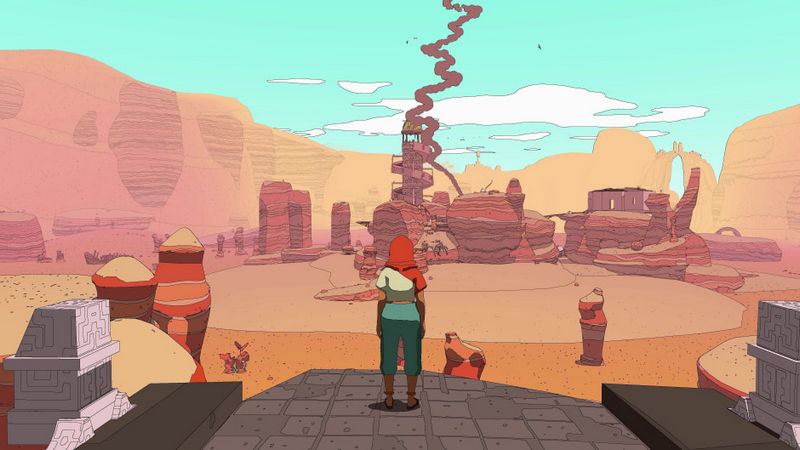
I think a lot about ritual and gaming, I think they are intertwined. Not only within the games themselves, but also the process of playing games, sitting in your place of comfort, getting yourself a snack or putting on your headset could look like a ritual to an outside observer. Within games themselves, players tend to play in loops, again a kind of ritualistic expression of design. Now in terms of how we encourage players to enter certain emotional states, I also think games can touch on this, we tried with Sable to connect players as directly as possible to the world they are exploring, for example. One of the things we do is try to minimise the UI, and not give players a mini-map but instead force them to directly engage in their surroundings. It’s like exploring a new place but instead of looking around you, you spend all your time looking down at your phone navigating a 2D abstraction of the environment. I think more than anything, I feel that my objective making games now is to transport people to new places and explore new ideas and feelings.