As a renowned video game writer and narrative designer, Tom Jubert has helped create some of the most captivating and immersive stories in the industry. From his work on games such as “The Swapper” and “The Talos Principle” to his contributions to the critically acclaimed “Subnautica” ,Tom has proven himself to be a master storyteller.
In this interview, we dive into Tom’s creative process, his inspirations, and the challenges he’s faced throughout his career. From discussing the unique challenges of storytelling in video games to exploring his latest project, we gain valuable insight into the mind of a true industry innovator. So, without further ado, let’s hear from Tom Jubert himself.
Thank you for accepting my enquiring Tom. It’s my very first interview and couldn’t be more pleased to have you. I promised you a chat about naration, philosophy and Pink Floyd. Hope I ll deliver in the end. So silence is gold, let’ s get started:
What inspired you to become a narrative designer, and how did you get started in this field?
As a kid my two great passions were games and scifi/fantasy books, so it was simply my dream job. Scifi has always been a way to explore issues close to our lives, but recontextualised in ways that let us see them from a distance. I spent many of my teenage years writing letters and emails to developers, first seeking work experience, then internships, and finally writing positions. Eventually I found Frictional Games, who had just released their Penumbra tech demo. I sent them a rewrite of their intro sequence, and they replied to say I had the job on the condition I could wait to get paid until the game got released.
As a writer in the gaming industry, what do you believe are the unique challenges and opportunities that come with writing for interactive media?
So many. Getting out of the player’s way might be one of the biggest. It’s not a novel, it’s not a film. People aren’t here exclusively for your words. Your words are just one layer of context in a larger experience. World building becomes more important, plotting less so. The more you can let go of your story, the more player can make it their own. It’s less about a central character (because that’s the player) and more about the environment that reacts to them. It’s less superficial and less polished, in a way. We’re not building a one dimensional set and controlling the audience perspective. We’re simulating as real a world as we can afford, then letting the player poke around in it.
I really enjoyed how you shape narration in Subnautica. You trusted the story to the player – “Go discover who you are, there is no limitation except basic human needs”. And after a couple of hours BOOM! Revelation and interpretation. A simple story turns into philosophical debate. It’s something than modern games narration seems to limit. Invisible walls, numerous cutscenes and so on. How did you achiev creating a story that is immersive and engaging for players, while also balancing the demands of gameplay and interactivity? Are there any particular techniques or strategies that you find helpful when working on a game narrative?
I think it’s much easier than trying to do a Last of Us style filmic experience. That kinda thing is fighting against the current – always trying to keep the player hemmed in so they get the perspective the author wants for them.
The main strategy I use is the concept of push/pull narrative. The push narrative is what we force every player to go through, and it should be the minimum necessary information to understand the main story beats. In SN that’s things like the Aurora exploding, the gun firing, and the alien bases. We gate the endgame with keys you can only find by going through the core ‘push’ narrative locations.
The pull narrative is everything else: the juicy optional world building stuff like survivor audio logs, creature scan data, visual cues like the Peeper vents. I put as much into that as I can, then trust that player will manage their own pace and depth of exploration of that stuff. Not everyone wants to read a paragraph about every lifeform in the game. But most everyone wants to take action to learn something about some particular thing. Everyone wins, because I’m free to write whatever I want, story becomes gameplay, and player becomes director.

How do you think games can be used as a medium to explore philosophical questions and ideas in a way that is different from other forms of media, such as literature or film?
Dialogue trees are essentially a Socratic dialog already, so the job’s done for us, and we used it to good effect in Talos Principle. I loathe to complicate it any further: games simply allow player to be part of the dialog instead of an inert observer. That’s pretty crucial to philosophical discovery.
How do you integrate philosophical ideas into the narratives and gameplay mechanics of your games, and what impact do you hope they have on players? Do you believe video games have the potential to shape philosophical movements in the future?
I’m not great at character drama, I’m a conceptual writer, so I start with whatever philosophical dilemma I’m interested in, then embody that in characters and plot. If the debate is philosophy of mind (as in The Swapper), then one character becomes a functionalist, another becomes an error theorist, then we introduce a plot device that turns on who’s right (some kind of scifi mind transfer machine), and see which side the player lands on. It’s important not to have a ‘correct’ side. I have my own views, and I present them, but player is free to go the other way, and gets an ending that’s appropriate for them regardless.
In Talos Principle 2 I’m trying something a little different in that I’m trying to present a subjectivist moral theory that turns on compassion and understanding, but without going too far into the nuts and bolts of it. Instead I’m testing where player stands on the simple idea: are they high on compassion, are they a little more rational-minded, or are they strictly opposed to any form of subjectivism? I think the important of compassion is an idea as old as language, but I suspect it’s due a resurgence. There’s a tendancy I don’t like to frame the moral debate as individualism vs collectivism, but I’m more sold on ideas around authenticity, virtue and love. I hope games and all kinds of media will help to converge on that idea over time.
This particular question is from our community. If we tell the same story in two different mediums, in our case to television and video games, are video games or not better narrative media in relation to a TV series?
Not better, just different. Although I’m a subjectivist, so some forms will be better than others for some people – just not objectively so. Or rather, they’ll objectively be better subjectively.
There is a lot talking about AI taking control of arts nowadays. As AI technology continues to evolve, how do you see it changing the role of traditional narrators and storytellers in games? Can you envision a future where AI systems can dynamically generate and deliver personalized narrative experiences for individual players, and if so, how might this impact the art of game storytelling?
It’s coming! We’re already at a point where AI can build you a bespoke game – but badly. It will get better fast. But for me the jury’s still out on whether it will match human creativity. It’ll be great on performing specific tasks (“tell me a story about a utilitarian who questions their beliefs when it comes to individual rights”), but not so great on choosing those tasks. Part of what makes a great storyteller is they have a gut instinct for the sorts of stories that people want to hear.
With the rise of episodic and “games-as-a-service” models, how do you think storytelling can evolve to keep players engaged over time while still delivering satisfying narrative arcs?
Meh, no idea. Episodic has been around for a while, and it never seemed to me like that big a change to be honest.
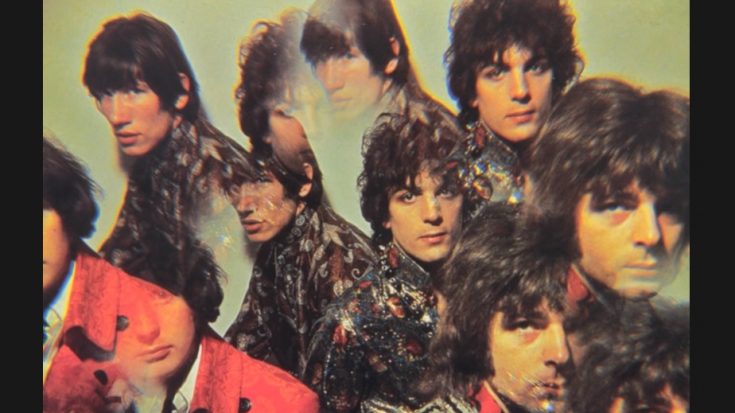
Many of Pink Floyd’s songs feature complex narratives and storytelling elements. Are there any Pink Floyd songs or albums that you particularly admire for their storytelling and why?
Let’s go for The Gnome from The Piper at the Gates of Dawn. Stories don’t have to be complex to refer to something deep. After all, aren’t we all just little gnomes, staying in our homes, biding our time until one day we might find another way to say “ooh my”?
Pink Floyd’s music is known for its exploration of themes like alienation, society, and the human condition. Do you think these themes are still relevant today, and do you see any parallels between Pink Floyd’s music and modern culture?
Themes go out of style, but I don’t think they ever become irrelevant. Alienation is a growing issue today with the increasing distance between rich and poor, east and west, truth and propaganda; but I’m sure it was a big deal as well when whoever it was discovered fire and split society into those who know how and those who don’t.
Can you talk about any upcoming projects you ‘re working on and what excites you about them?
I’ve taken a back seat on Talos Principle 2 with Jonas and Verena leading the story, but there’s a substantial subplot of mine in there that I mentioned earlier that I’m excited to see come to fruition this year, and I’m sure what they’re doing with the main thread will be another fascinating and creative extension of the original game’s DNA. I’m also working on two very different unannounced projects. The first is an attempt to get a new indie developer up and running with a couple of friends, we’ll hopefully turn out a demo or two later this year. The second is an ambitious Unreal FPSRPG from an established indie developer that I can’t say anything more about.

